New Relic
The world’s best engineering teams rely on New Relic to visualize, analyze and troubleshoot their software.
00
problem
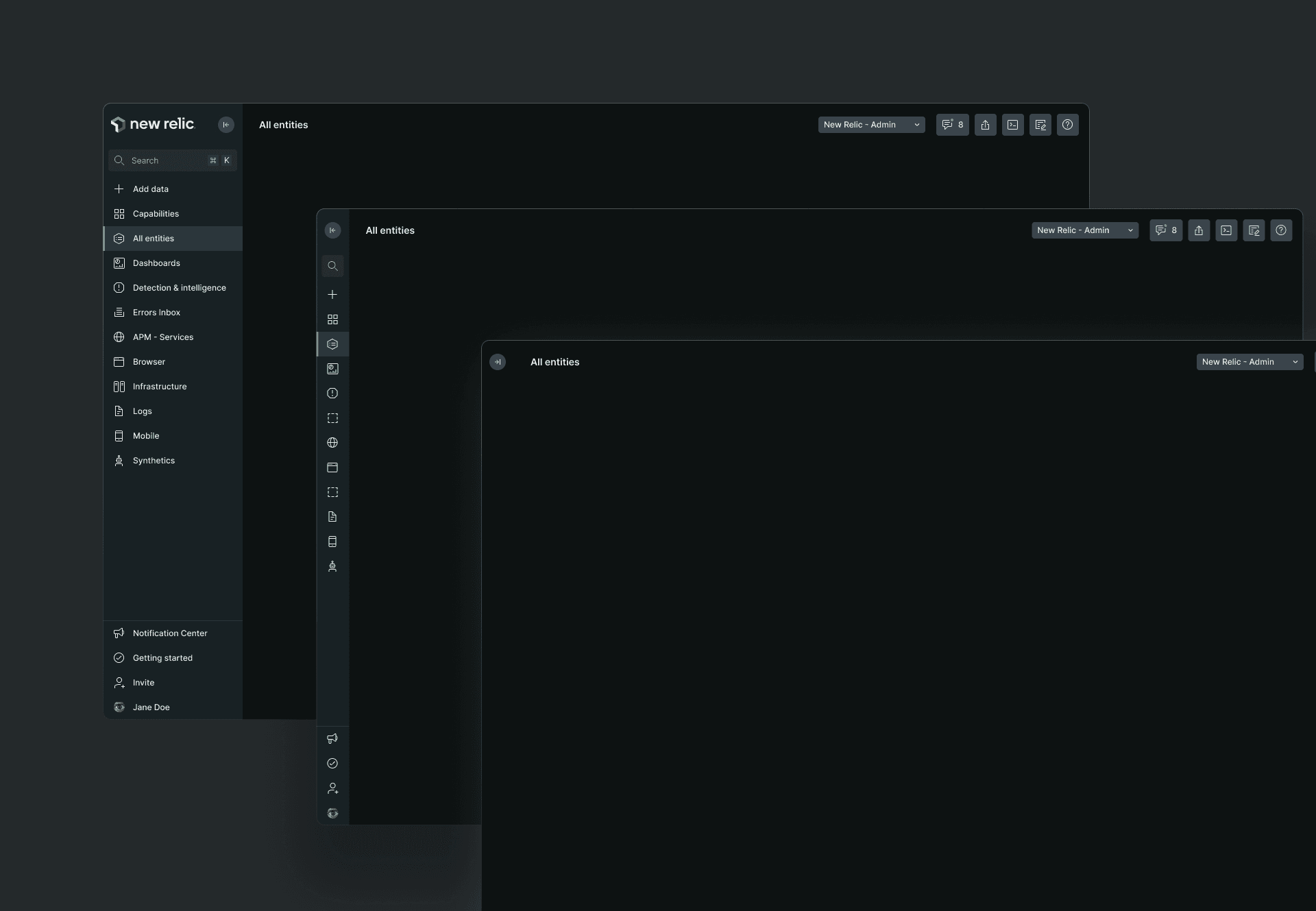
Technical Debt and fragmented info-architecture. After a decade of market-leading growth, New Relic’s platform had become a visual representation of Conway’s Law. Products were built in functional silos and "bolted on" to the interface, resulting in a cluttered, flat navigation hierarchy. High Cognitive Load: A saturated top-level menu forced users to parse through internal product names rather than their own goals. The lack of cross-experience definitions meant users "hit walls" when moving between products, failing to see New Relic as a unified platform. New customers struggled to understand the platform’s value proposition due to a navigation structure that prioritized product catalogs over user intent.
solution
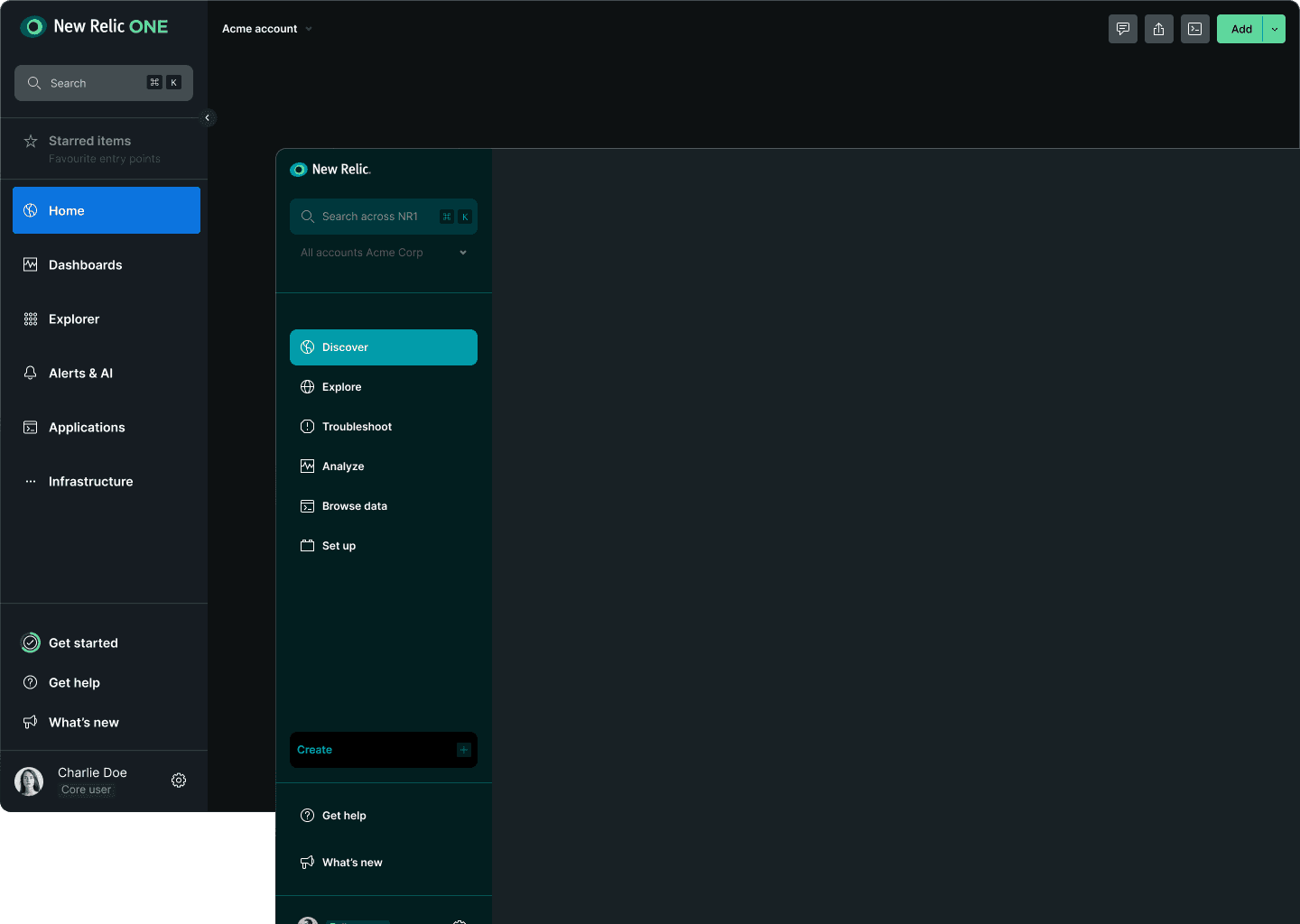
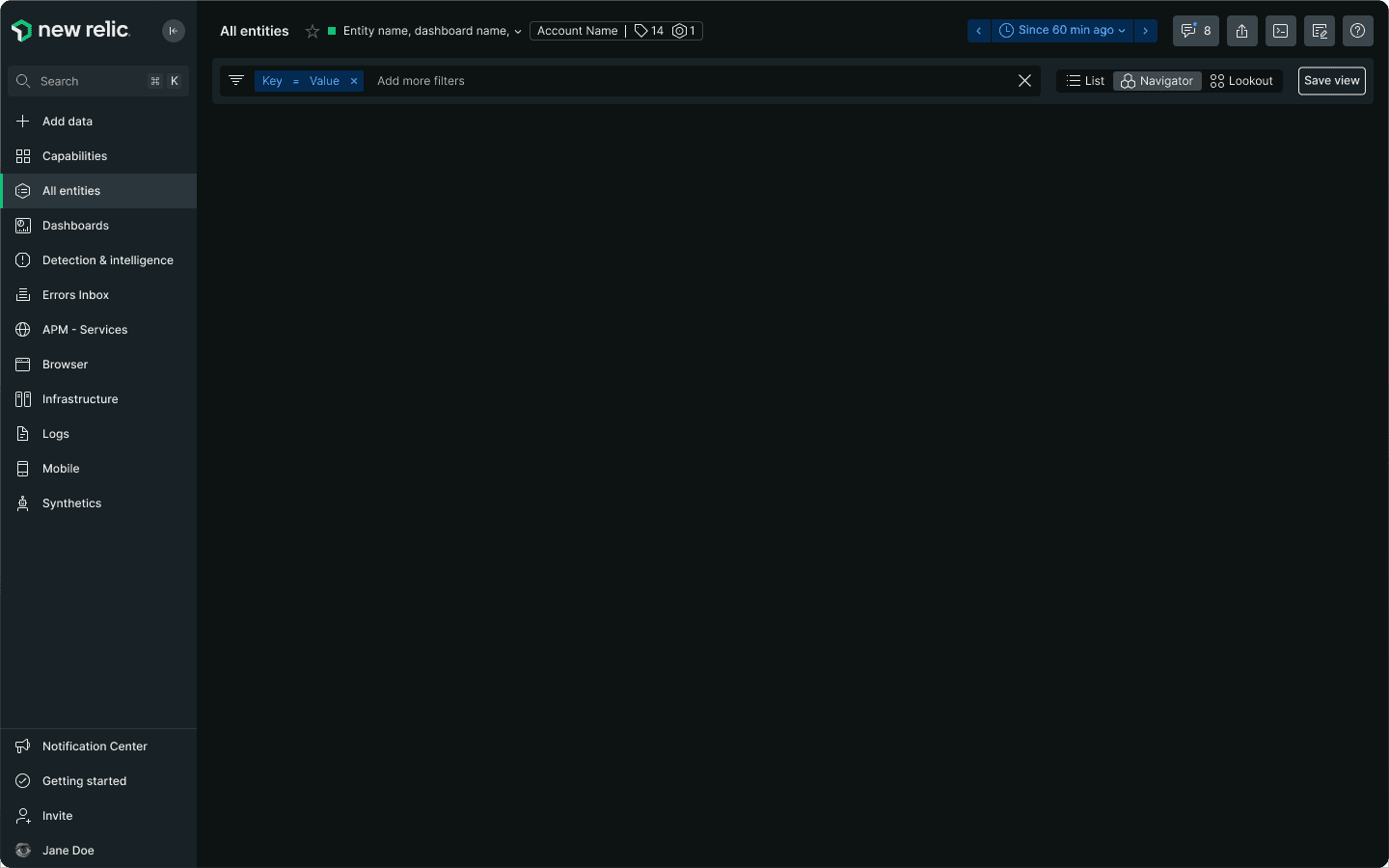
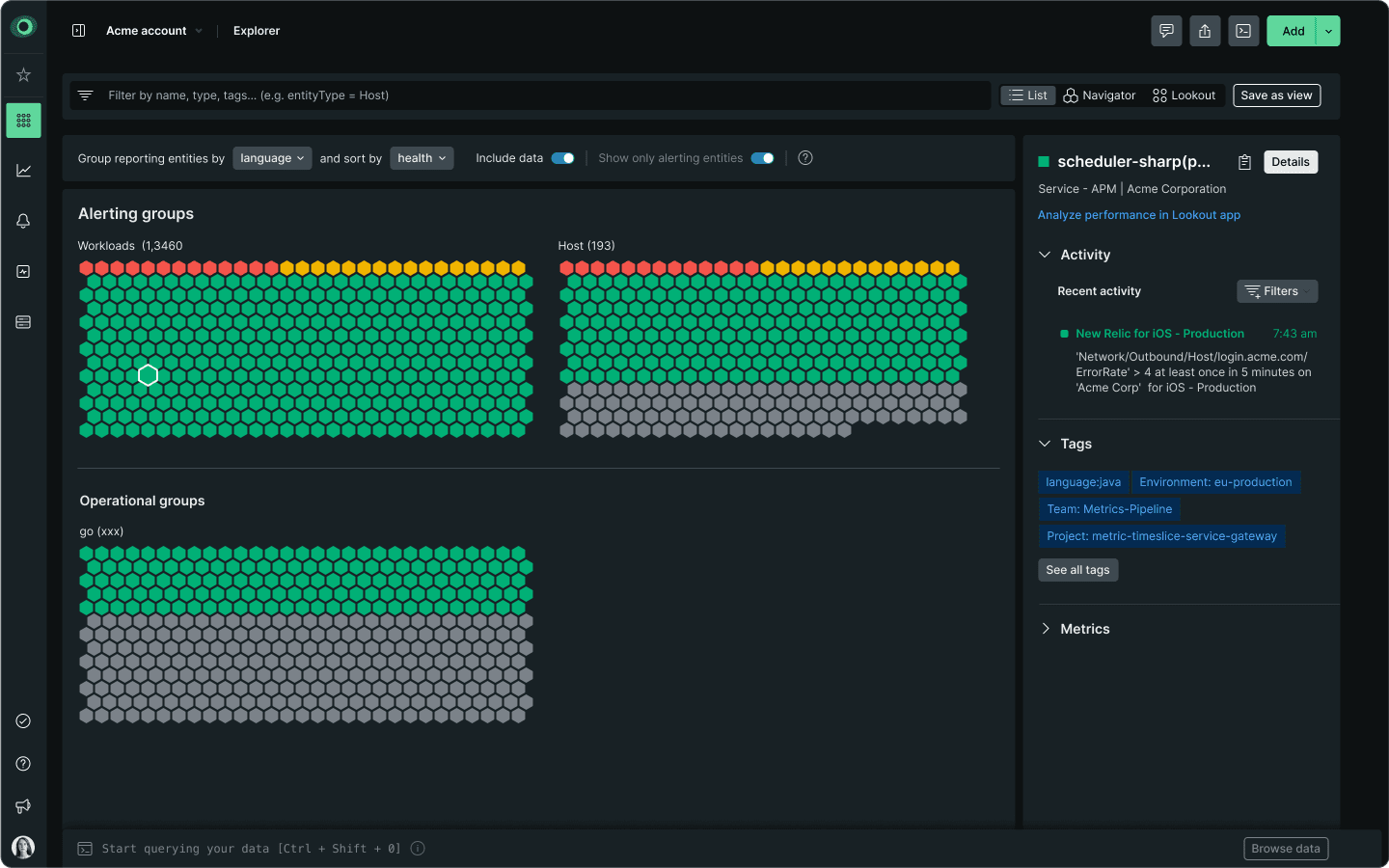
A Task-oriented, scalable framework. We moved away from a product-centric navigation to a Jobs-to-be-Done (JTBD) framework. This strategy focused on two key structural shifts: Intent-based information architecture Sidebar navigation & spatial consistency
Design Process
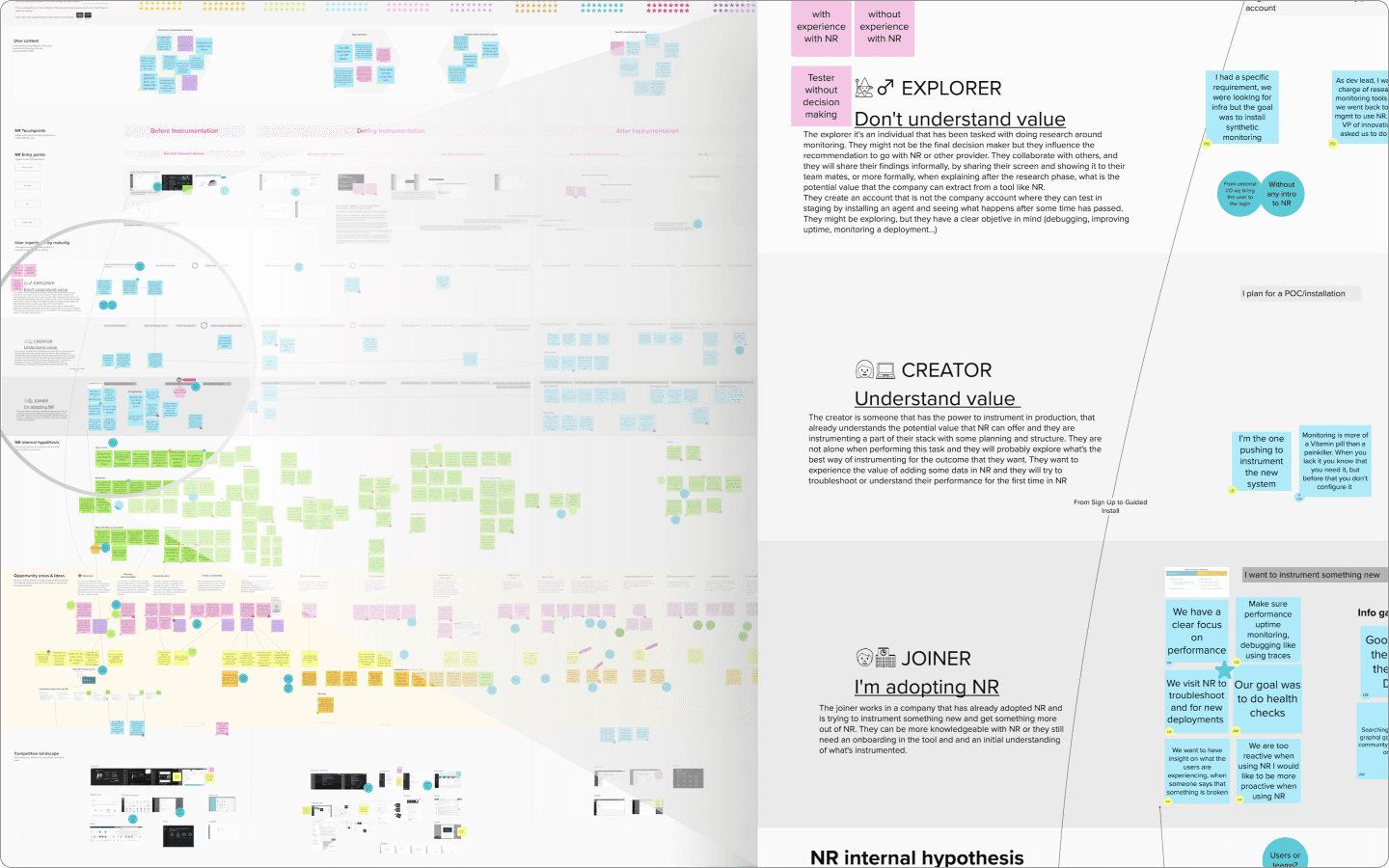
1. Analyze previous research documents, interview key stakeholders
2. User testing with 4-5 sacrificial concepts
3. Product design proposal
4. Proposal user testing
5. Validation and presentations to teams
6. Implementation plannings and project merge with the rest of the initiatives of that year.
7. Work with the rest of the teams, Ui writing, Product marketing, Design system team
Team first month | Team second month | Team for the rest of the project |
|---|---|---|
1 Product Design Manager | 1 Product Design Manager | 1 Product Design Manager |
1 Product Designer ← (Me) | 2 Product Designers | 4 Product Designers |
1 UX engineer | 1 UX engineer | 1 UX engineer |
1 Researcher | 2 Researcher | 2 Researcher |
1 Engineering manager | 1 Engineering manager | |
2 Engineers | 8 Engineers | |
1 Director of engineering |
A series of cross-functional sessions and workshops aligned teams across roles and levels, helping build shared buy-in. What follows is a snapshot of the execution. For more info, just reach out
year
2023
timeframe
90 days
tools
Figma / Figjam / Amplitud
category
UI/UX
01
02
03
04

05
see also