How to hire a UI designer

Demand for UI Designers Continues to Expand
The demand for highly skilled user interface (UI) designers is on the rise. The US Bureau of Labor Statistics reports that there were approximately 128,600 digital interface and web designers (which includes UI designers) in 2023, with an 8% growth rate projected from 2023 to 2033.
Despite a vast talent pool of UI designers, finding and hiring a high-level professional can be daunting. The difficulty arises not only from the growing demand for UI design services, but also from the rare attributes UI designers possess—a blend of creativity, web design proficiency, and industry experience. Further complicating the challenge is that companies seek full-time or freelance UI designers who have experience in particular business sectors, or delivery formats, such as mobile apps or e-commerce sites. Meanwhile, rapidly evolving technologies like generative artificial intelligence (Gen AI), virtual reality (VR), augmented reality (AR), and voice-based digital assistants are radically transforming the field, creating new business opportunities but exposing a sizable talent gap.
With business and technology needs shifting, it is more important than ever to hire highly qualified UI designers. By ensuring that digital interfaces are intuitive, accessible, and aesthetically pleasing, user interface designers can help engage users, maintain brand consistency, and boost profitability.
In this guide, we describe the attributes first-class candidates possess and provide suggestions for crafting a compelling job description—along with faqs and a focused set of interview questions to guide your hiring process.

What Attributes Distinguish Quality UI Designers from Others?
It’s no secret that hiring a proficient UI designer can have a significant impact on the long-term success of a digital product. In fact, Forbes, citing a 2016 Forrester Research report titled, The Six Steps for Justifying Better UX, notes that a well-designed user interface can raise conversion rates by up to 200%. But to achieve such high-impact results, you need to know the skills and attributes to look for in your search for qualified candidates. In general, outstanding UI designers share the following traits:
Command of Design and Developer Tools
The best UI designers show proficiency in the use of design tools such as Sketch, Figma, and UXPin. They understand the strengths and weaknesses of such platforms and can readily adapt to your company’s preferred software. Hiring a UI designer with a knowledge of HTML and CSS is an added bonus, as they tend to have a more holistic understanding of the development process and the technical vernacular to collaborate effectively with developers.
Mastery of Visual Design
To create products that prioritize accessibility and are visually compelling, a UI designer should have a solid foundation in graphic design principles and techniques. A strong grasp of color theory, layout principles, compositional balance, and visual hierarchy is essential to build functional, aesthetically pleasing digital assets.
In addition, UI designers should be familiar with fundamental design patterns, components, and input and selection controls for iOS, macOS, and Android. Highly qualified UI designers will align typography and iconography choices with brand standards, while ensuring legibility and appealing to users’ expectations for visual clarity and consistency. In your selection process, look for detail-oriented designers who have a discerning eye for the latest style trends and demonstrate a comprehensive understanding of the World Wide Web Consortium’s (WC3) Web Content Accessibility Guidelines (WCAG) 2.1.
Knowledge of Interaction Design Principles
Experienced UI designers apply familiar interaction patterns and user flows to create interfaces that function intuitively and help users achieve their goals. They simplify the presentation of complex information by ensuring high-priority content lies “above the fold,” where it can be engaged without scrolling. Much like interaction designers, UI designers apply best-practice approaches for arranging and presenting call-to-action (CTA) buttons, error handling messages, status indicators, interactive states (such as “hover” states), and navigation and search tools. Highly skilled designers adhere to the principle of progressive disclosure, presenting information only when it best serves users.
Expertise in Responsive and Mobile Design
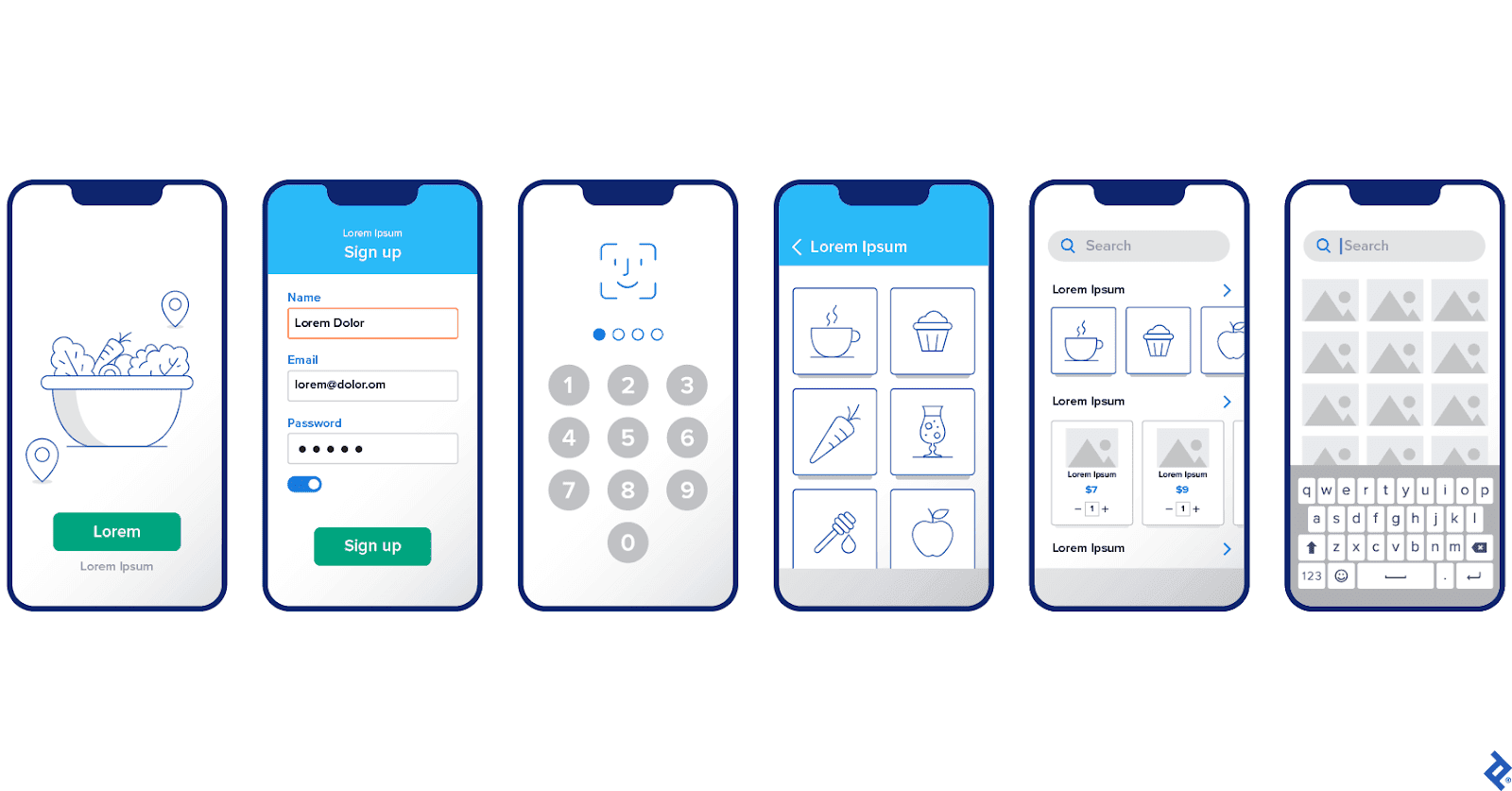
The data analysis firm Statista reports that approximately 59% of global web traffic is generated through mobile devices. To meet the needs of a massive mobile audience, driven in part by the popularity of social media platforms, a capable UI designer should be comfortable developing mobile-friendly, responsive designs that adjust their display to the screen size and orientation of tablets, mobile phones, and desktops. When hiring a full-time or freelance UI designer on a platform like Toptal, consider their technical skills and familiarity with adaptive layouts, fluid grids, media queries, usability testing, and performance optimization.
Proficiency in Prototyping and Wireframing
A skilled UI designer is capable of using prototyping and wireframing tools, such as Figma and Sketch, to efficiently arrange visual elements and communicate their design concepts. Being able to visualize a digital application allows stakeholders and developers to feel confident about the designer’s decisions and methods. During design reviews or team collaborations, an expert UI designer will often use interactive prototypes and wireframes to generate meaningful discussions around product use, development, and implementation.
How Can You Identify the Ideal UI Designer for You?
UI designers have varied levels of professional experience, and it’s important to decide whether a junior designer or a more seasoned professional best suits your needs. Several factors, including your budget, project requirements, timeline, workplace culture, and the design services your company specializes in will factor into your choice. As a first step, however, it’s useful to consider the distinctions between junior and senior UI designers.
Junior UI Designers
Junior UI designers typically have limited professional experience and only a few years of practical training. With limited time in the trenches, they may have only worked on smaller, less complex tasks—such as registration forms or landing pages—or assisted more established designers on larger projects. These designers are proficient in UI principles and can create high-quality wireframes, mock-ups, page layouts, and onboarding flows, but they may lack the intuition and professional experience to consider a design holistically.
Nevertheless, junior UI designers are considerably more affordable than senior designers and may be more malleable to your company’s standards and culture. They are also more likely to share design work exhibiting fresh ideas and show an eagerness to learn and take on responsibilities. Because of their flexibility and enthusiasm, junior UI designers are suitable for projects with evolving requirements, as well as technical tasks with hard deadlines and clearly scoped deliverables.
Senior UI Designers
Senior UI designers, on the other hand, tend to have robust knowledge spanning multiple industries, including SaaS and e-commerce, enabling them to create sophisticated, impactful interfaces aligned with business and brand objectives. Those with leadership experience can leverage their talent to rally teams around product design decisions that can be applied strategically across a platform—or multiple platforms—to satisfy users and deliver exceptional performance outcomes.
In addition, senior UI designers tend to work faster and more independently than earlier career professionals. With a keen understanding of the web development process, they are likely to view their work in the context of broader organizational goals. Collaborating closely with UX designers, growth strategists, and developers, they plan and conduct user testing, often using mock-ups, and design prototypes to gather feedback and insight. Applied strategically, these findings can inform interface refinements that help optimize acquisition, retention, and conversion rates.
Another benefit of hiring a senior UI designer is they often have a deep knowledge of design thinking, a methodology that emphasizes the importance of user behavior research. To tailor interface models to target audiences, a designer versed in design thinking might evaluate their decisions against industry benchmarks and use surveys, funnel analyses, and A/B testing to evaluate the effectiveness of their choices. This work is highly collaborative: Coordinating the workflows of multiple internal stakeholders and project teams requires exceptional communication skills and the project management experience of a senior UI designer. While more expensive than early career designers, hiring designers at the senior level is wise if you’re looking to grow and scale your platform.
Keep in mind, too, that hiring decisions are rarely a zero sum game. Often the best scenario for a company, whether it be a startup or established enterprise, is to build a well-rounded design team that includes a mix of junior and senior talent. By blending the enthusiasm of junior designers with the expert design skills and strategic insight of a senior UI designer, you will give UI design projects the best chances for success.
Strategic Factors to Consider
When evaluating candidates, several other considerations are worth noting. First, the best UI designers should be familiar with emerging technologies. As startups and large companies turn to Gen AI, voice user interfaces (VUIs), and VR/AR to engage users and deliver content in new ways, traditional formats and symbolic frameworks for interface design are changing. Even highly qualified candidates will have gaps in their knowledge base, but it’s important that they show an eagerness to learn and adapt to innovation. Look for UI designers who have experience designing contemporary or next-generation interface models your company is actively pursuing, whether that’s an AI-powered chat dialog, a contactless payment service, or a dark mode interface.
Second, highly qualified UI designers should understand how to use visual elements to capture users’ attention and direct it to key information and CTAs. According to DataReportal, an affiliate site of the data advisory group Kepios, Internet users spend 6 hours and 37 minutes per day, on average, engaging with screens. To command their attention, experienced UI designers optimize their page layouts using tools, such as in-app analytics, heat maps, scrollmaps, and session recordings. Understanding where a user’s eyes are directed and where they click and scroll is crucial to improving site experience. Look for UI designers who use empirical data to guide layout decisions.
Finally, there is a tendency to conflate UI and UX designer roles; however, these positions cater to different skill sets. The key distinction is that a UI designer focuses primarily on the visual appearance of a product. UX designers, by contrast, specialize in the holistic user experience and all that entails—typically user journey mapping, persona development, usability testing, and information architecture. Unless you are seeking a UX/UI designer with a dual skill set, be sure not to filter out highly qualified UI designers by over-indexing user experience design in your search criteria.
How to Write a UI Designer Job Description for Your Project
Writing a compelling job description is crucial to attract top-tier UI design talent. Start with a clear, role-specific job title, such as “UI Designer,” “UI/UX Designer,” “User Interface Designer,” or “Visual Designer.” Define the role succinctly by outlining key responsibilities like designing intuitive interfaces, creating wireframes, developing prototypes, and collaborating with cross-functional teams.
In the body of the job description, highlight essential skills and qualifications. Be sure to emphasize proficiency in design tools such as Sketch, Figma, or Adobe XD, and request a resume and portfolio. You’ll also want to mention soft skills, such as strong communication, problem-solving abilities, and teamwork—important attributes for UI designers to have when collaborating with developers, product managers, and other stakeholders. Consider the following qualifications and requirements as a starting point for your LinkedIn or Behance job board posting:
Qualifications:
Proficiency in industry-standard design tools such as Sketch, Figma, and Adobe XD.
A strong portfolio showcasing design work that demonstrates their expertise in user-centric design principles.
Solid understanding of user research, interaction design, mobile app design, and responsive design.
Excellent communication and problem-solving skills, with a proven ability to work collaboratively on a design team.
Responsibilities:
Translate user needs and business requirements into engaging visual solutions.
Develop and maintain design systems and style guides.
Work closely with developers to ensure seamless implementation of designs.
Stay up-to-date with the latest UI trends, techniques, and technologies.
Remember, an expertly written job description doesn’t just attract the right candidates; it also sets clear expectations for the role, ensuring a smoother hiring process and better alignment between the designer and your company’s goals. Before posting to a job board, make sure to describe your company’s vision and culture to give candidates a sense of what it’s like to work there. Clearly state the experience level required, along with the desired years of experience, and any specific industry expertise, for instance SaaS or e-commerce, that’s relevant to your company. Conclude the post with a succinct call to action, encouraging qualified candidates to apply.
What Are the Most Important UI Designer Interview Questions?
The following interview questions can help you hold productive discussions and make well-informed decisions:
Can you explain your design process{::}?
While individual project goals vary, a skilled designer will strive to meet high standards throughout their design process. Listen for answers that touch on conducting user research, exploring user behavior patterns, brainstorming functional design concepts, prototyping, seeking feedback, iteration, and maintaining brand consistency. The creative design process can be highly personal, but collaboration and communication are broadly applicable keys to success.
How do you incorporate accessibility into your designs?
Accessibility should be fundamental to any UI designer’s approach. Ensuring a broad range of users can access your application, whether it be a SaaS, e-commerce, or healthcare-related product, is not only ethical, it is good business practice; a thoughtful UI designer should be committed to implementing accessibility standards in their work. Listen for responses that speak to semantic markups, screen readers, responsive design, color contrast, alt text, keyboard navigation, and W3C accessibility standards.
How do you stay updated on the latest UI trends and technologies?
Taking a proactive approach to learning allows a UI designer to be aware of new innovations, best-practice design solutions, and industry insights. Listen for answers that mention reading (or subscribing to) design-related publications, participating in conferences or attending webinars, joining in-person or online design communities, taking courses to stay updated and adaptable, or networking with cross-disciplinary professionals.
Can you describe a project where you improved the user experience significantly?
A skilled UI designer will be able to provide an answer that highlights a professional project with tangible, real-world results that leaves their client satisfied. Answers will vary, but a strong response might touch on acquiring insights through user research and testing, collaborating with colleagues to identify and address pain points, making a site responsive across devices, or improving user engagement by refining the visual organization of a page or introducing interactive elements.
What metrics do you use to evaluate the success of your design?
When evaluating design work, a qualified UI designer will use both qualitative and quantitative metrics. They might assess a web experience with user satisfaction surveys, gather feedback from customer success representatives or product managers, or use web analytics tools to measure click-through rates, users’ average time on a page, or registration or sales conversion percentages. Regardless of the methods they use, a strong candidate will be able to articulate a clear connection between data and design decisions.
Why Do Companies Hire UI Designers?
In a competitive digital landscape where companies are in a daily contest for users’ attention and trust, UI designers play an indispensable role, bridging the gap between users and technology. They provide design services that help companies deliver exceptional digital product experiences by ensuring that interfaces are not only functional but also user-centered, visually appealing, and responsive to multiple screen sizes and orientations. As research has shown, UI designers’ work to optimize interfaces can have a direct impact on user engagement and retention, thereby driving business growth.
But hiring highly skilled full-time or freelance UI designers is becoming increasingly difficult. Today, finding proficient candidates requires persistence and a sharp eye for the attributes that help transform complex ideas into user-friendly interfaces aligned with business goals. Technical expertise in user research, visual hierarchy, and interaction design is part of what companies seek when hiring UI designers, but qualified candidates also need to keep pace with emerging technologies. Moreover, they need to be able to organize information effectively, communicate clearly with stakeholders, and ensure front-end applications are broadly accessible and inclusive for users. These skills, while rare, are crucial to help businesses stay competitive.
As digital transformation continues to evolve, the demand for skilled UI designers is only likely to increase, underscoring their crucial role in shaping the future of digital experiences. Companies interested in capturing the attention of specific audiences, standing out from competitors, and increasing brand loyalty and sales are wise to hire top-tier UI designers.
Article published by Toptal design blog →
date published
Aug 21, 2023
reading time
5 min